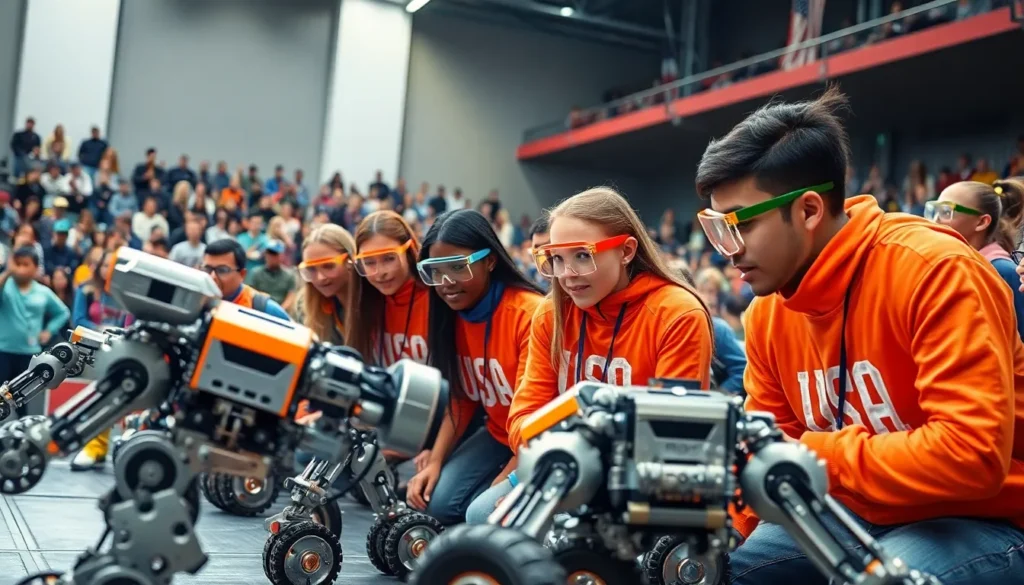
In a world where athletes sweat it out on the field and robots whir and beep in the lab, a curious question emerges: is robotics a sport? Picture this: metal gladiators battling it out in an arena, sparks flying and gears grinding, while spectators cheer like it’s the Super Bowl. It’s not just science fiction; it’s the thrilling intersection of technology and competition.
Is Robotics a Sport
Robotics encompasses the design, construction, operation, and use of robots. It blends engineering, computer science, and human interaction to create machines that can perform tasks autonomously or assist humans.
Definition of Robotics
Robotics refers to the interdisciplinary field focused on creating robotic systems. It includes aspects such as mechanics, electronics, and software control. Robots can operate independently or in coordination with humans. The technology enables various applications, including manufacturing, healthcare, and exploration. Continuous advancements in artificial intelligence enhance robots’ capabilities, allowing them to learn and adapt over time. This adaptability contributes to their growing prominence in various industries, transforming how tasks are approached and executed.
Evolution of Robotics
The evolution of robotics highlights significant milestones in technological advancement. Early robotic concepts emerged in the 20th century, leading to the first industrial robots in the 1960s. These robots primarily performed repetitive tasks in manufacturing environments. Rapid advancements in computer technology fueled further developments. By the 1980s, robotics branched into personal and service robots. Today’s robotics integrates machine learning and AI, enabling smarter and more versatile robots. This progression illustrates the shift from basic assembly line machines to sophisticated robots capable of complex interactions and tasks. Ongoing research continues to explore new frontiers, including robotics in sports and entertainment.
The Concept of Sport
Understanding the concept of sport involves examining its defining features.
Defining a Sport
A sport typically emphasizes competition, skill, and organized rules. The definition varies, but it generally includes physical activity or mental challenges. Many would argue that sports require both a competitive element and a governing body overseeing the rules. Consider events like soccer or basketball, which adhere to consistent regulations. Additionally, some classifications extend to non-physical contests, such as chess or eSports, which demonstrate strategic skill and competition. Thus, any activity that incorporates these elements could qualify as a sport.
Characteristics of Sports
Sports exhibit several significant characteristics that often define their essence. First, competition drives participants to perform at their best. Skill development plays a crucial role, whether it’s refining techniques or mastering strategies. Moreover, rules provide structure, facilitating fair play and clear outcomes. Equipment, venues, and spectators also contribute to the sport’s environment. From fan engagement to team dynamics, the social aspect enhances the overall experience. Therefore, sports are not merely activities; they embody competitive spirit, teamwork, and community involvement.
Exploring Robotics as a Sport
Robotics showcases competitive elements akin to traditional sports. Events like robot battles and autonomous races capture audience excitement, inviting participation from diverse teams and individuals.
Competitions and Events
Numerous robotics competitions take place worldwide. These events include the FIRST Robotics Competition and VEX Robotics World Championship, drawing teams from various educational institutions. Participants design robots to complete specific tasks within a set timeframe. Robots may navigate obstacle courses, engage in combat simulations, or perform complex maneuvers. Each competition emphasizes strategy and innovation, mirroring the dynamics found in conventional sports.
Skill Development and Teamwork
Robotics fosters essential skills in participants. Engaging in robotics projects teaches engineering principles, programming languages, and problem-solving techniques. Collaboration plays a vital role; team members leverage each other’s strengths to build effective robots. Effective communication and project management become critical, as students learn to assign roles and tackle challenges together. This collaborative environment cultivates a spirit of teamwork that resonates throughout various sporting disciplines.
Perspectives on Robotics in Sports
The debate surrounding robotics in sports features diverse opinions from various stakeholders. Advocates highlight the advantages of incorporating robotics into competitive arenas, emphasizing innovation and skill development.
Support from Robotics Advocates
Support from robotics advocates emphasizes the educational benefits of robotics competitions. Participants develop crucial skills in programming, engineering principles, and teamwork through hands-on experience. Events like FIRST Robotics Competition engage students in STEM fields, fostering critical thinking and creativity. These advocates assert that robotics competitions reflect traditional sports through strategy and collaboration. They make the case that enthusiasm for robotics can inspire a new generation of innovators and instill a passion for technology. Competitions often create community involvement, resembling the camaraderie found in conventional sports. Such supporters argue that robotics offers an inclusive platform for diverse participants, allowing anyone to engage in a sporting environment.
Criticism from Traditional Sports Community
Criticism from the traditional sports community often centers around the authenticity of robotics as a sport. Skeptics argue that robotics lacks physical engagement, which is a core aspect of sports. They contend that competition in robotics is more about technical knowledge than physical skill, diminishing its legitimacy. Some believe that spectators may not experience the same level of excitement when watching robots compete as they do in human-athlete sports. They highlight the need for physicality in defining a sport, warning that robotics could alienate audiences accustomed to traditional sports. This perspective raises questions about the integrity of competition in the fast-evolving landscape of sports, where the boundaries continue to blur.
Conclusion
The debate surrounding robotics as a sport continues to evolve as technology advances. With the rise of competitive robotics events that emphasize strategy teamwork and innovation it’s clear that these competitions embody many characteristics of traditional sports. Participants not only develop technical skills but also engage in a collaborative environment that mirrors the essence of athletic competition.
As robotics becomes more integrated into the sporting landscape it challenges conventional definitions of what constitutes a sport. This ongoing discussion invites enthusiasts from both robotics and traditional sports to explore new dimensions of competition and community. Ultimately the intersection of robotics and sports may pave the way for a new era of athleticism where technology and human ingenuity unite.