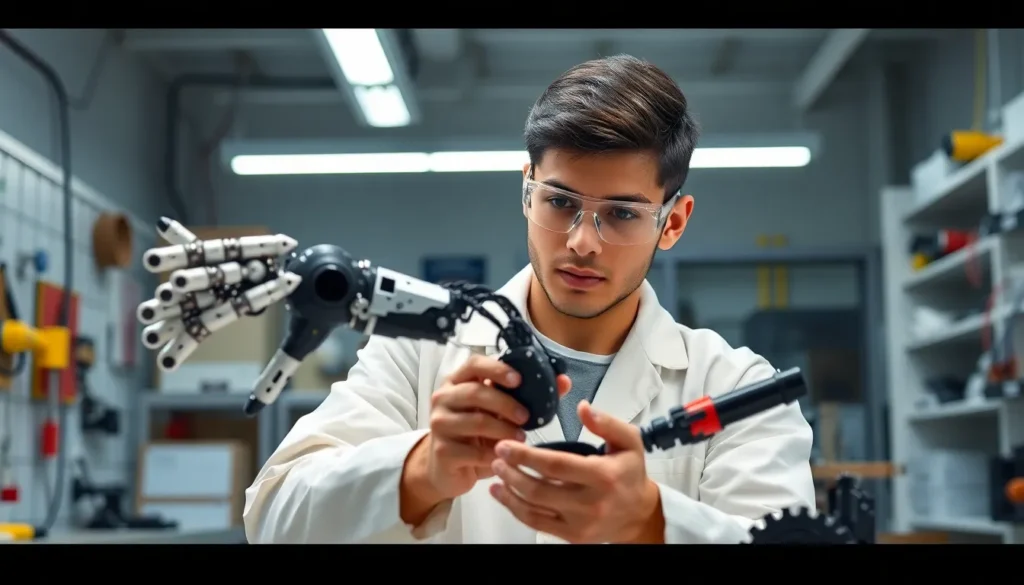
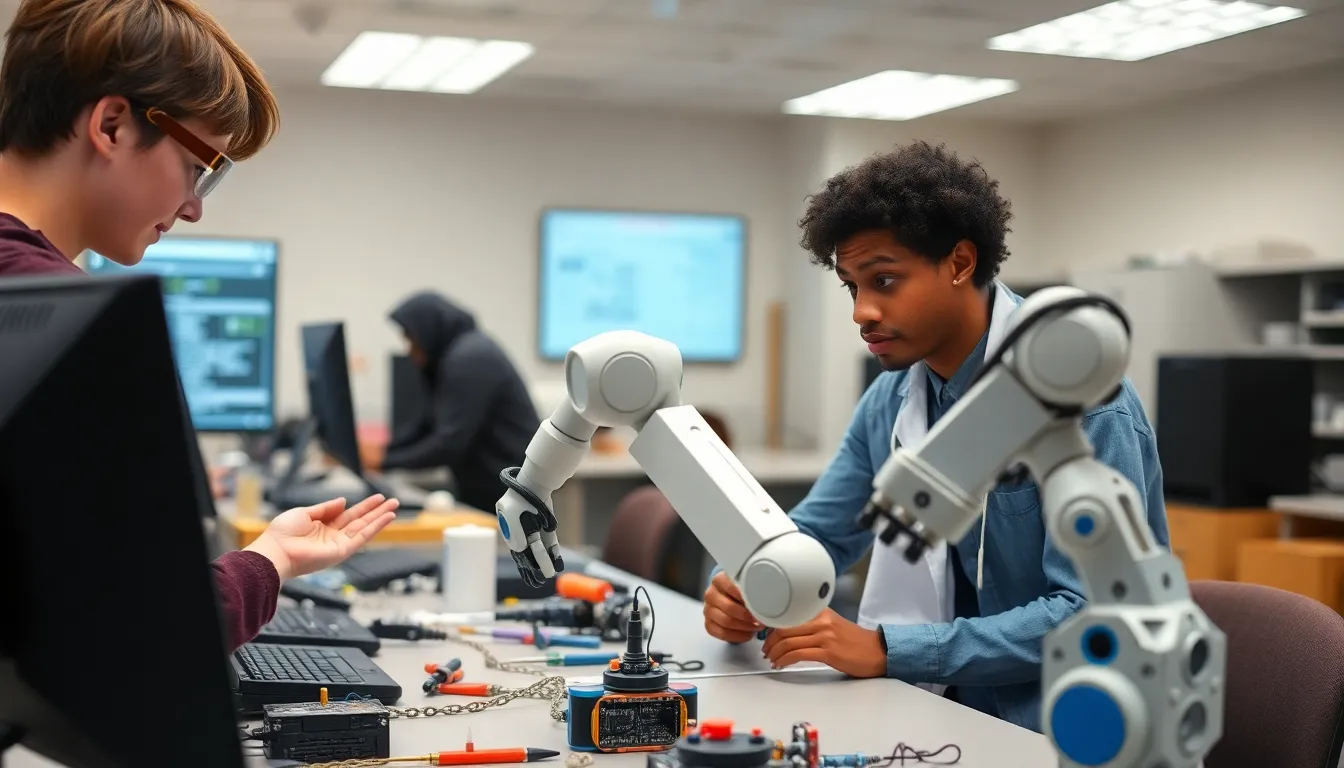
In a world where robots are no longer just the stuff of sci-fi movies, the demand for robotics engineers is skyrocketing. Imagine being the mastermind behind machines that can vacuum your living room or even explore distant planets. A robotics engineer degree isn’t just a ticket to a job; it’s a passport to the future, where creativity meets cutting-edge technology.
Picture this: you’re designing a robot that can serve coffee while doing the cha-cha. With a degree in robotics engineering, that dream could become reality. This field combines elements of mechanical engineering, electrical engineering, and computer science, making it a thrilling ride for anyone who loves to tinker and innovate. So, if you’ve ever wanted to create the next generation of robotic companions (or just get paid to play with cool gadgets), read on to discover what it takes to embark on this electrifying journey.
Robotics Engineer Degree
The robotics engineer degree focuses on developing skills needed to design and build robotic systems. Programs typically include coursework in mechanical engineering, electrical engineering, and computer science. Students learn about automation, artificial intelligence, and machine learning, providing a comprehensive understanding of technical principles.
Classes often cover control systems, programming, and materials science. Aspects like sensors and actuators are crucial in robotics, making it essential for students to gain hands-on experience. Many institutions offer labs where future engineers can build and test prototypes.
A bachelor’s degree serves as a common entry point. Students who pursue a master’s or doctoral degree often engage in more specialized research. Various degree programs integrate collaborative projects, allowing students to work in teams similar to professional settings.
Internships play a significant role in building practical skills. These opportunities enable students to apply theoretical knowledge in real-world contexts. Establishing connections with industry professionals enhances job prospects post-graduation.
Certification programs also exist for those looking to deepen specific skills or transition from another field. Advanced skills in robotics can lead to careers in various sectors, including manufacturing, healthcare, and aerospace. The versatility of a robotics engineer degree prepares graduates for diverse opportunities in an evolving job market.
Core Curriculum
The core curriculum for a robotics engineer degree encompasses a blend of essential and specialized courses vital for a strong foundation in the field.
Fundamental Courses
Fundamental courses typically introduce students to engineering principles related to robotics. Subjects like mechanical engineering provide insights into the physical aspects of robot design. Electrical engineering covers circuits and systems essential for robotics. Computer science courses focus on programming, algorithms, and software development, forming the backbone of robotic systems. Mathematics classes enhance problem-solving skills with a focus on calculus and linear algebra. Students also engage in physics, emphasizing mechanics and electromagnetism, which are crucial for understanding robot dynamics.
Specialized Courses
Specialized courses allow students to delve deeper into specific robotic applications. Topics such as automation systems explore the integration of robots in production environments. Artificial intelligence courses cover machine learning techniques that enable robots to adapt and improve. Advanced programming classes focus on robotics software tools and frameworks. Courses in human-robot interaction examine the interface between humans and robots. Additionally, students may study control systems, which address the management of robotic movements and behaviors. This tailored coursework prepares graduates for targeted roles in various industries.
Skills Required For Success
Success in robotics engineering relies on a blend of technical and soft skills. These abilities enable professionals to thrive in this dynamic field, addressing the challenges of innovative machine design.
Technical Skills
Technical skills form the backbone of any robotics engineer’s expertise. Proficiency in programming languages such as Python, C++, and Java is essential for developing software that controls robotic systems. Knowledge of CAD software aids in designing and modeling components accurately. Familiarity with electrical circuits and sensor integration ensures that engineers create functional and responsive robots. Experience with automation and artificial intelligence techniques allows engineers to improve machine learning capabilities. Understanding mechanical systems, dynamics, and control theory ties together the different facets of robotics. These skills not only facilitate system design but also promote efficient troubleshooting.
Soft Skills
Soft skills play a pivotal role in a robotics engineer’s career. Effective communication fosters collaboration among team members and stakeholders. Problem-solving abilities enable engineers to navigate the complexities of robotic challenges. Adaptability proves vital in an ever-evolving industry, allowing engineers to embrace new technologies and methodologies. Creativity fuels innovation, inspiring fresh perspectives for robot design and functionality. Time management ensures that project deadlines are met while maintaining quality. Leadership skills empower engineers to guide teams successfully, enhancing overall project performance. Combining these soft skills with technical expertise sets robotics engineers apart in their field.
Career Opportunities
Robotics engineering opens a variety of career paths, providing opportunities in multiple sectors. Graduates often find themselves in high-demand roles, leveraging their skills in innovative ways.
Job Roles
Robotics engineers can pursue roles such as robotic systems designer, automation engineer, and robotics programmer. Research positions focus on developing cutting-edge technologies. Other professionals may work as project managers, overseeing robotic projects from conception to completion. Some might specialize in machine learning, enhancing robots’ capabilities. Field service engineers ensure robots operate efficiently in real-world settings. Each of these roles requires a mix of technical proficiency and creative problem-solving.
Industries Hiring
Manufacturing companies frequently seek robotics engineers to streamline production processes. Healthcare organizations rely on robotic technologies for surgeries and rehabilitation. Aerospace industries employ engineers to develop drones and automated systems for safer flight operations. The automotive sector thrives on robotics for assembly line efficiency and vehicle innovation. Entertainment and gaming industries explore robotics to create interactive experiences. Each industry benefits from advancements in robotics, reflecting the growing need for specialized skills.
Conclusion
A robotics engineer degree opens doors to a world of innovation and opportunity. As industries increasingly rely on automation and intelligent machines, the skills acquired through this program become invaluable. Graduates are well-prepared to tackle challenges in various sectors, driving advancements that can transform everyday life.
With a blend of technical expertise and creative problem-solving, robotics engineers are poised to lead in an ever-evolving landscape. The potential for growth in this field is immense, making it an exciting time for those passionate about technology and design. Embracing a career in robotics engineering means contributing to a future where machines enhance human capabilities and redefine possibilities.